
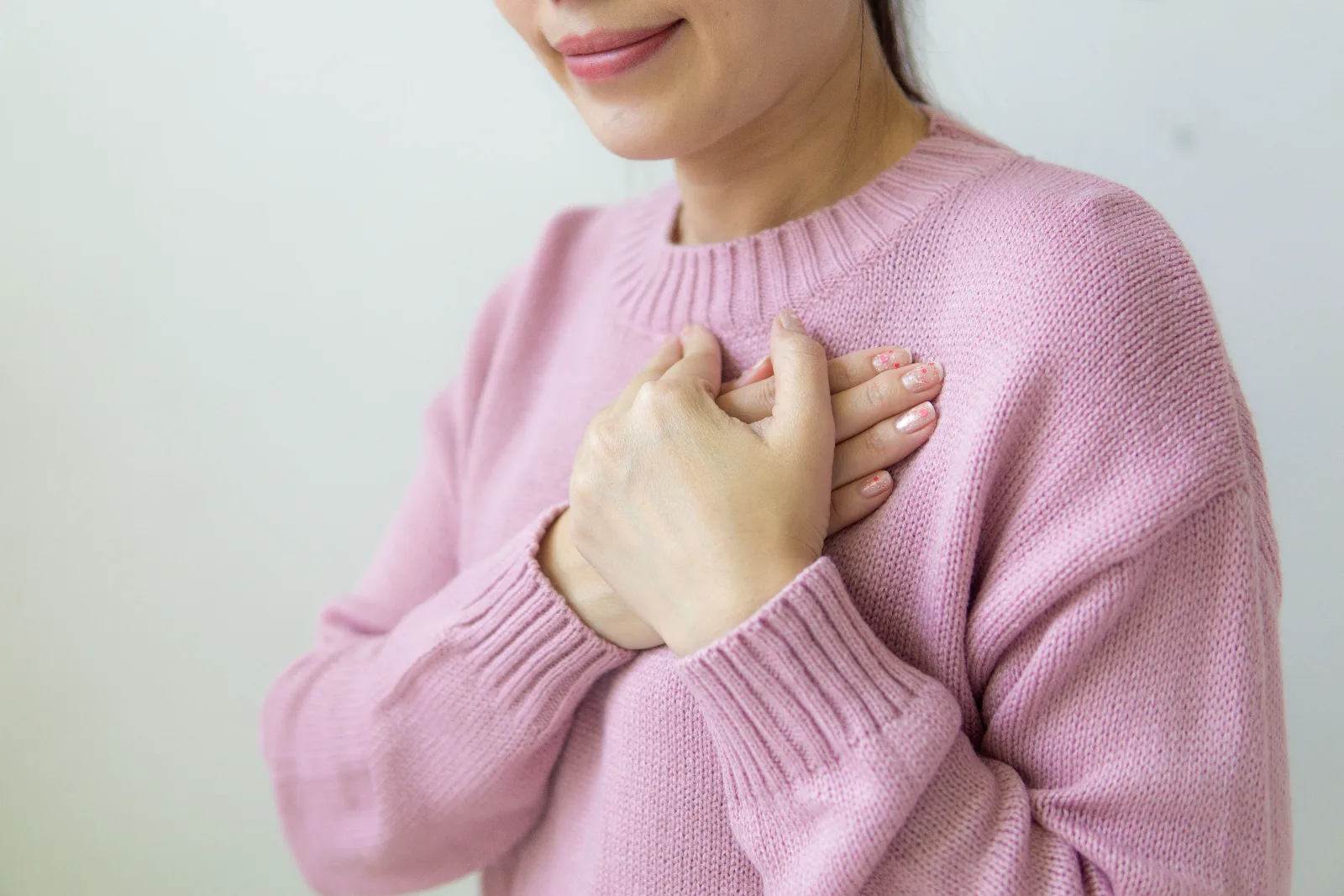
Somatic Experiencing® (SE) is a body-oriented approach that can help you process stress and distressing experiences through awareness of your body. It was developed by the psychologist and biophysicist Dr Peter A. Levine. At its centre is the question of how your nervous system builds up tension and how it lets it go again.
What exactly is Somatic Experiencing?
SE assumes that stress and overwhelming experiences can become lodged in the body. Your nervous system then stays on alert, even though the situation is long over. This may show up as inner restlessness, tension, sleep problems or difficulty switching off.
Unlike in many talking therapies, you do not have to recount or analyse everything in detail. Instead, you gently direct your attention to sensations in the body, such as warmth, pressure, tightness, tingling or spaciousness. This ability is called interoception: the perception of what is happening inside your body.
The basic idea is simple and yet profound: when faced with danger, your body automatically switches to fight, flight or freeze. This protective response makes sense, and you do not control it consciously. Things become difficult when it does not reach a natural conclusion. Your system then remains stuck in activation or withdrawal, even though the danger has passed.
Peter Levine was inspired, among other things, by how animals in the wild return to calm after a threat. SE therefore asks less what happened to you and more how your body has stored the experience and how it can let it go again. So you do not have to fix anything in yourself. Instead, you give your natural capacity for self-regulation room again.
How does body awareness calm your nervous system?
Body awareness can calm your nervous system because it shows you what is happening within you right now and allows you to respond consciously. When you feel tension without letting it overwhelm you, you give your body the chance to regulate itself again.
In SE, you will come across a few central ideas:
- Resources: First you look for whatever gives you support, such as a place, a person or a pleasant bodily sensation.
- Small steps: You approach a difficulty only in manageable portions, so that you do not overwhelm your system.
- Pendulation: Your attention moves back and forth between a tense area and a more relaxed area in the body.
The aim is not to make feelings disappear. You learn to feel them, to bear them and to come back to calm. In this way, your inner sense of safety can grow step by step.
Why is Somatic Experiencing the essence of my work?
For me, SE is more than one method among many. It is an attitude that underpins everything else: before anything can change in the body, your nervous system needs a sense of safety.
This attitude shows in the pace, in the attention to your boundaries and in the question of what your body needs right now. You do not have to prove anything or force anything. When your body senses that nobody is pushing it, it begins to release tension of its own accord.
That is why I decided to train as a Somatic Experiencing Practitioner (SEP). I am currently in the middle of this training. What I learn there already shapes my work today: SE brings together body awareness, safety and self-regulation to form a foundation on which everything else can grow, whether in conversation, in work with muscle testing or in small exercises for everyday life.
How can you begin with body awareness in everyday life?
Take two to three minutes and simply notice what is there. You can start right away. This does not replace professional support, but it is a gentle way in:
- Sit comfortably and notice where your body is in contact with the chair and the floor.
- Let your eyes slowly wander around the room and rest on something you find pleasant.
- Notice how your breath comes and goes by itself. You do not have to change anything.
- Ask yourself: where in my body does it feel neutral or pleasant right now? Stay there for a few breaths.
- If something unpleasant comes up, that is fine. Turn your attention back to the floor beneath your feet or to the pleasant spot. You set the pace.
How does this fit with the work at the kinesiology practice in Zurich Enge?
In my kinesiology practice in Zurich Enge, I work with Integrative Kinesiology, trauma-sensitive support and nervous system work. The attitude of Somatic Experiencing always flows into this work.
In kinesiology, I combine conversation, body awareness and muscle testing as gentle biofeedback. Together we look at what is weighing on you, what strengthens you and how you can find more connection with your needs again. All of this takes place in a safe, respectful setting.
With a supplementary insurance for complementary medicine, your health insurer usually covers a large part of the costs. I am recognised by all health insurers that cooperate with the Erfahrungsmedizinisches Register (EMR), as well as by Visana and EGK. How much your health insurer pays depends on your personal policy.
When is additional support worthwhile?
Additional support is worthwhile when tension, exhaustion or distressing memories noticeably restrict your everyday life, or when you cannot move forward on your own. In the case of severe after-effects of trauma, strong anxiety or depressive phases, a medical or psychotherapeutic assessment is essential. Complementary, body-oriented support can be beneficial alongside this, but it does not replace the assessment.
If you are in an acute crisis, you can reach Die Dargebotene Hand (the Swiss crisis helpline) around the clock on 143.
Conclusion
Somatic Experiencing shows how helpful it can be to put the body at the centre when the nervous system cannot settle. You do not have to force anything. It is enough to notice what is there and to create small moments of safety for yourself. If you would like support along the way, get in touch with me or book an appointment.
Frequently asked questions
Is Somatic Experiencing scientifically proven?
What is the difference between Somatic Experiencing and kinesiology?
What does trauma-sensitive mean?
Can I practise body awareness on my own?
Sources
These studies and reviews form the scientific basis for this article:
- Payne, P. Levine, P. A. & Crane-Godreau, M. A. (2015): Somatic experiencing: using interoception and proprioception as core elements of trauma therapy. Frontiers in Psychology, 6, 93.
- Brom, D. Stokar, Y. Lawi, C. Nuriel-Porat, V. Ziv, Y. Lerner, K. & Ross, G. (2017): Somatic Experiencing for Posttraumatic Stress Disorder: A Randomized Controlled Outcome Study. Journal of Traumatic Stress, 30(3), 304 to 312.
- Andersen, T. E. Lahav, Y. Ellegaard, H. & Manniche, C. (2017): A randomized controlled trial of brief Somatic Experiencing for chronic low back pain and comorbid post-traumatic stress disorder symptoms. European Journal of Psychotraumatology, 8(1), 1331108.
- Kuhfuss, M. Maldei, T. Hetmanek, A. & Baumann, N. (2021): Somatic experiencing, effectiveness and key factors of a body-oriented trauma therapy: a scoping literature review. European Journal of Psychotraumatology, 12(1), 1929023.
