
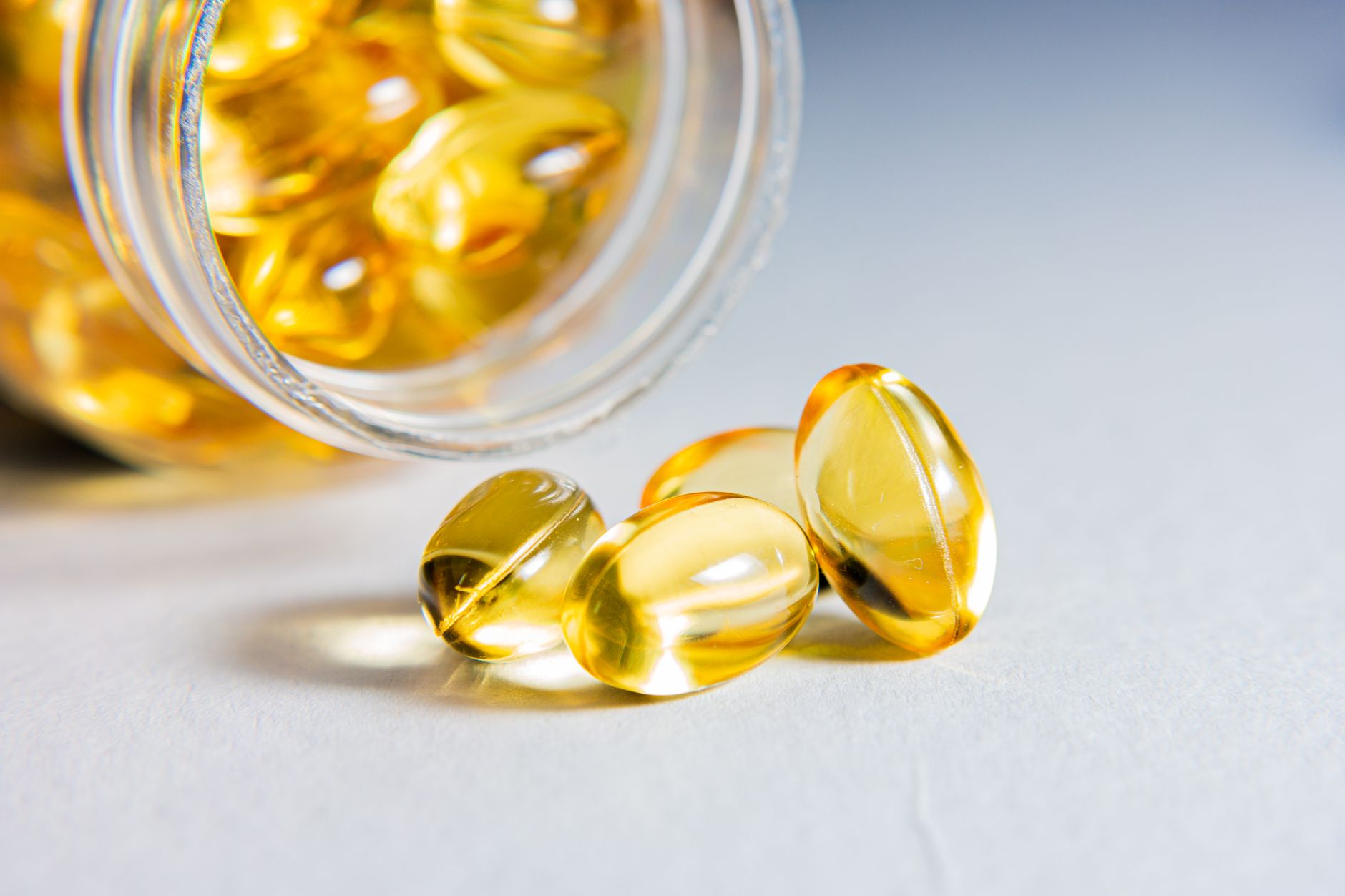
Omega-3 fatty acids are polyunsaturated fatty acids that your body needs for many functions. Your body cannot produce the plant-based form, ALA, itself, so you have to take it in through food. The long-chain forms EPA and DHA are made from it only in small amounts. Good sources are oily fish, microalgae, linseed oil, rapeseed oil and walnuts. A fatty acid analysis can show how well supplied you are.
What are omega-3 fatty acids and what does your body need them for?
Omega-3 fatty acids are among the so-called “good fats”. They are building blocks of your cell membranes and the starting material for various messenger substances in the body.
Alpha-linolenic acid (ALA) is essential, meaning vital: your body cannot produce it itself. From ALA it can build the long-chain omega-3 fatty acids EPA and DHA, but only to a very limited extent.
It is well established that EPA and DHA contribute to normal heart function. DHA also contributes to normal brain function and to the maintenance of normal vision. These effects apply at a daily intake of 250 mg.
Which foods contain omega-3?
Omega-3 is found in plant-based and animal foods, though in different forms:
- ALA (alpha-linolenic acid) is the plant-based form. You will find it in linseed oil, linseeds, chia seeds, walnuts and rapeseed oil.
- EPA (eicosapentaenoic acid) is a long-chain form found mainly in oily sea fish.
- DHA (docosahexaenoic acid) is also long-chain and occurs in the same sources as EPA.
Important to know: your body converts only a small part of ALA into EPA and even less into DHA. How well this works varies from person to person. Plant-based sources are valuable, but they do not reliably cover your need for EPA and DHA.
Oily fish such as herring, sardines, mackerel, salmon and trout provide EPA and DHA directly. Make sure they come from a sustainable source. Incidentally, EPA and DHA are originally produced by microalgae. They sit at the start of the marine food chain and are a good option if you do not eat fish.
How much omega-3 do you need?
The Federal Food Safety and Veterinary Office (FSVO, in German: BLV) recommends:
- 2 to 3 tablespoons of vegetable oil daily, of which at least half should be rapeseed oil
- one portion (20 to 30 g) of unsalted nuts, seeds or kernels daily
For EPA and DHA, professional bodies recommend eating oily fish once or twice a week.
How are omega-3 and omega-6 connected?
Besides omega-3, omega-6 fatty acids are also essential, so you need both. In the body, however, they use the same enzymes for conversion. That is why the ratio between them plays an important role.
A ratio of omega-6 to omega-3 of about 5:1 is recommended. According to the research institute Agroscope, in Switzerland it lies between 10:1 and 25:1. So for every 10 to 25 parts of omega-6, there is only one part of omega-3.
This is not about bans, but about shaping the ratio more consciously. Plenty of omega-6 is found, for example, in sunflower and corn oil as well as in many processed foods. If you reach for rapeseed oil in the kitchen and regularly include omega-3 sources, you will already improve your ratio considerably.
Do you need omega-3 as a supplement?
That depends on your diet and your personal situation. If you are healthy and regularly eat oily fish, you often do not need a supplement. It can make sense, for example, if you eat little or no fish, follow a vegan diet, are pregnant or are breastfeeding. For people who do not eat fish, there are products made from algae oil.
Important for your safety:
- More is not better. Very high amounts of EPA and DHA can increase the tendency to bleed.
- If you take blood-thinning medication, are pregnant, are breastfeeding or have a medical condition, discuss a supplement with your doctor beforehand.
Why is a fatty acid analysis worthwhile?
As a fatty acid consultant, I offer fatty acid analyses. They show you how well supplied you are with omega-3 and what your personal ratio of omega-6 to omega-3 looks like.
If you would like to supplement omega-3, the analysis helps you tailor the amount specifically to you. With a second analysis after a few months, you can see whether your values have changed. This matters, because the uptake of fatty acids depends on various factors and is very individual.
How do you include omega-3 in your everyday life?
Small, manageable steps are enough:
- Add a teaspoon of ground linseeds or chia seeds to your muesli or yoghurt.
- Sprinkle a handful of walnuts over your salad or eat them as a snack.
- Use rapeseed oil for cooking and linseed oil for cold dishes. Linseed oil does not belong in a hot pan.
- Plan a meal with oily fish once or twice a week, for example salmon, trout or sardines.
- If you do not eat fish, check whether an algae oil suits you.
Where does this fit into a holistic view of you?
Perhaps you feel stressed, exhausted or inwardly restless and wonder whether your diet is supporting you well. Then it is worth looking at the whole picture. Omega-3 fatty acids are one building block among many, alongside sleep, exercise, recovery and the way you deal with strain.
I am a health scientist (MSc), nutrition consultant and fatty acid consultant. In my kinesiology practice in Zürich Enge, I combine integrative kinesiology and nervous system work with holistic nutrition. Together we look at what feels right for you and what really eases your everyday life.
Conclusion
Omega-3 fatty acids are among the nutrients you have to take in through food. Plant-based sources provide ALA, while oily fish and microalgae provide EPA and DHA. With rapeseed oil, nuts, linseeds and the occasional portion of oily fish, you are already well on your way. A fatty acid analysis shows you where you stand and is a good basis if you would like to supplement omega-3. If you like, we can discuss in an appointment how you can approach your diet and wellbeing holistically.
My personal recommendation
I have been using Norsan products myself for several years. What convinces me: the fish oil is a natural, non-concentrated oil from small fish such as sardines, mackerel and anchovies. It comes from sustainable wild catch with “Friend of the Sea” certification and is purified of pollutants and heavy metals in several stages. The laboratory analyses are publicly available. To protect the delicate fatty acids, it contains cold-pressed organic olive oil, which is rich in polyphenols. For anyone who does not want fish, there is a vegan variant made from algae oil. Whether you need omega-3, and how much, can be shown by a fatty acid analysis. You can have this done directly at my practice.
With my code ae8419 you receive 15% off from an order value of CHF 50. Go to Norsan with 15% off. Transparency: this is an affiliate link. If you order through it, I receive a small commission. There is no extra cost to you.
Frequently asked questions
Can my body produce omega-3 itself?
How can I get omega-3 without fish?
Do I need omega-3 as a supplement?
What does a fatty acid analysis show?
Sources
These studies, reviews and recommendations form the scientific basis for this article:
- Burdge, G. C. & Calder, P. C. (2005): Conversion of α-linolenic acid to longer-chain polyunsaturated fatty acids in human adults. Reproduction Nutrition Development, 45(5), 581 to 597.
- Klein, L. Kipp, K. Lorkowski, S. Eichelmann, F. & Dawczynski, C. (2025): Impact of α-linolenic acid supplementation on long-chain n-3 fatty acid profiles in Western, flexitarian, vegetarian, and vegan diets. Frontiers in Nutrition, 12, 1727308.
- EFSA Panel on Dietetic Products, Nutrition and Allergies (2010): Scientific Opinion on Dietary Reference Values for fats, including saturated fatty acids, polyunsaturated fatty acids, monounsaturated fatty acids, trans fatty acids, and cholesterol. EFSA Journal, 8(3), 1461.
- EFSA Panel on Dietetic Products, Nutrition and Allergies (2012): Scientific Opinion on the Tolerable Upper Intake Level of eicosapentaenoic acid (EPA), docosahexaenoic acid (DHA) and docosapentaenoic acid (DPA). EFSA Journal, 10(7), 2815.
- Wehrmüller, K. Schmid, A. & Walther, B. (2008): Taking a differentiated look at omega-3 fatty acids. Agroscope Liebefeld-Posieux Research Station ALP, Bern.
- German Federal Institute for Risk Assessment (BfR) (2009): For the enrichment of foods with omega-3 fatty acids, the BfR recommends setting maximum levels.
- Federal Food Safety and Veterinary Office (FSVO, in German: BLV) (2026): Recommendations on fat consumption.
